Scales, arpeggios, broken chords and contrary motion, Grade 1 to Grade 8 — drilled in a step-mode that waits for the right note, and scored on every run.
Scales, arpeggios, broken chords and contrary motion from Grade 1 to Grade 8, each tagged by hand, octaves and tempo. Filter to the grade you're sitting.
02
A drill that waits for you.
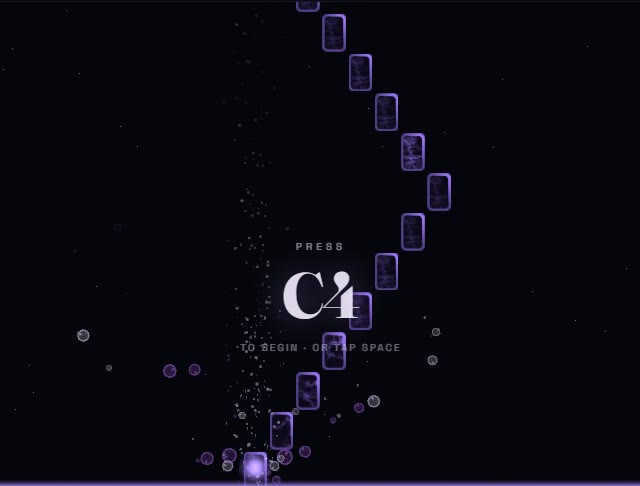
Step-mode holds on each note until you play it, so the bar that keeps tripping you gets learned at the pace you can play it clean.
03
A number, every run.
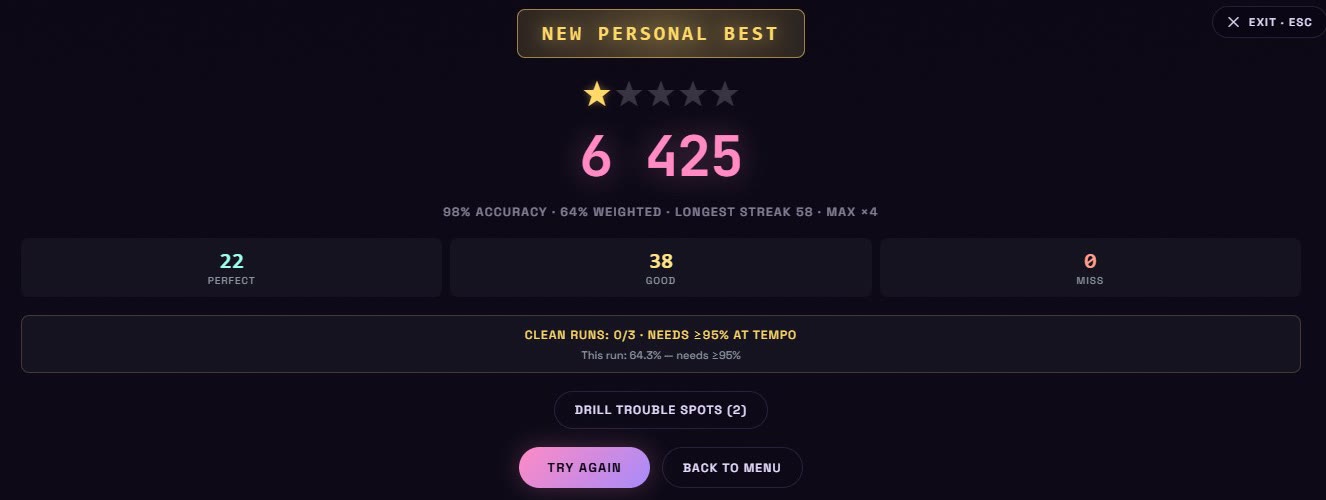
Accuracy, weighted score, longest streak, a perfect / good / miss split, and a star rating against your personal best.
01
What the software covers — and what it doesn't
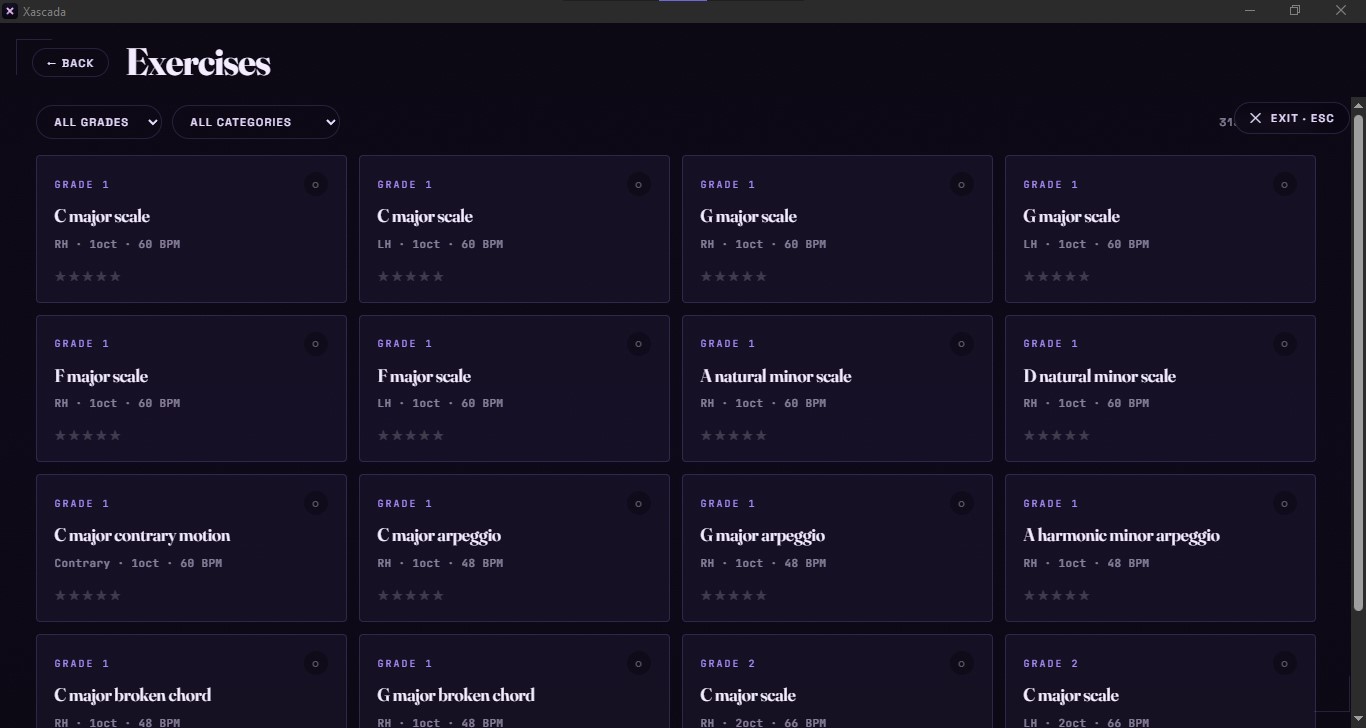
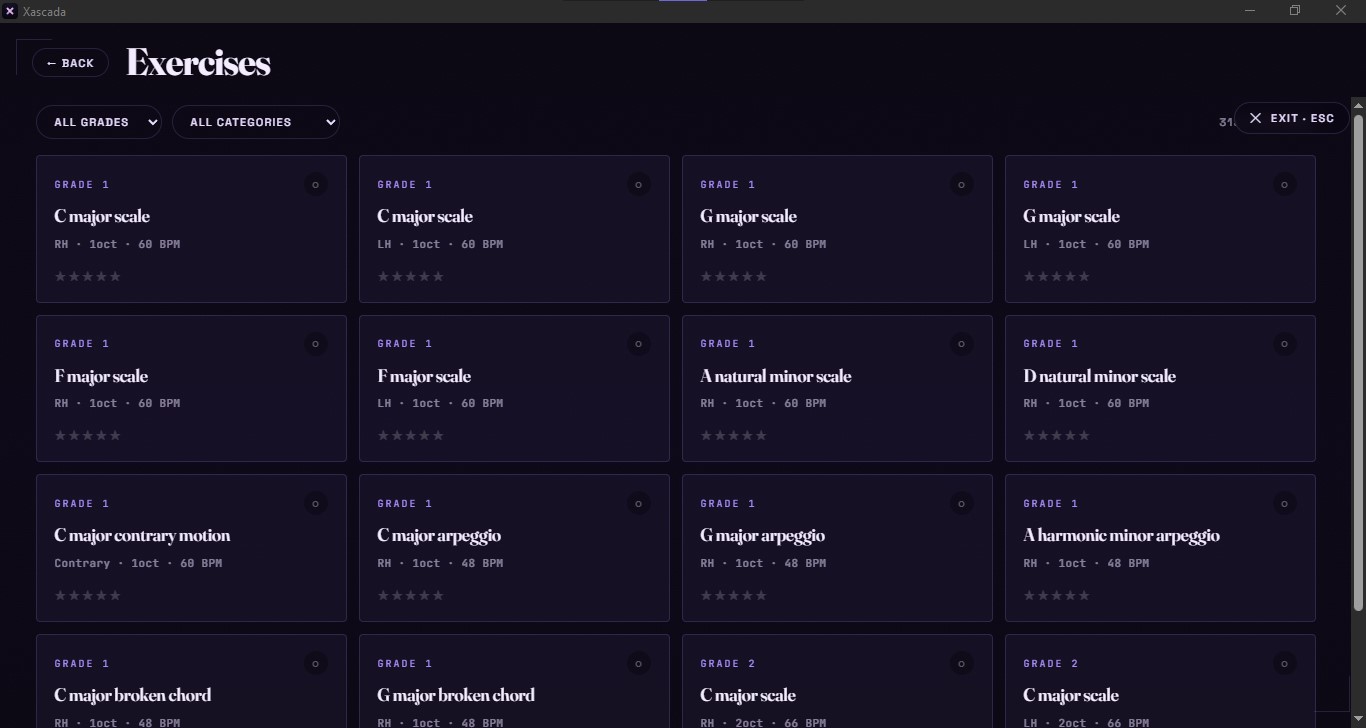
The exercise list, filtered by grade. Every card names its hand, octaves and tempo.
Xascada's exercise library is ABRSM technical work: scales, arpeggios, broken chords and contrary motion, Grade 1 to Grade 8. Each exercise is tagged by hand, octaves and tempo, so the list you work from is the list your grade asks for.
Pieces can be drilled too if you have them as MIDI files — open one and load it into a drill. Sight-reading and aural tests are outside what Xascada does.
Xascada is independent software. It is not affiliated with or endorsed by ABRSM.
02
A practice routine built on the score
Step-mode waits. Nothing moves until you play the note it asks for.
Scales improve when you can see them improve. This is the loop the scoring is built for:
1 Filter the exercise list to your grade and pick the exercise that's weakest.
2 Run it in step-mode first. The drill waits on each note, so you're learning the fingering, not racing the tempo.
3 Play a scored run. Read the accuracy and the perfect / good / miss split, not just the stars.
4 Check the trouble spots Xascada detected and drill those notes on their own.
5 Come back tomorrow and run it again. The star rating is against your personal best, so the only person you're measured against is you.
03
What a score tells you
A real run summary: 98% accuracy but 64% weighted, so the timing still needs work. The two trouble spots are one button away.
“That sounded better” is hard to act on. A run that moved from 78% to 86% accuracy, with the misses clustered in the same two notes of the descent, tells you exactly where tonight's ten minutes should go.
Every run is kept in your history with its score, streak and personal best, so a week of practice before an exam is something you can look at rather than guess about.
04
What you need
A computer running Windows 10 or 11, 64-bit, or macOS 12 or later, Apple Silicon and Intel, and a MIDI keyboard. Any standard MIDI keyboard or controller — 25 keys to 88, weighted or not. A wider keyboard covers the multi-octave exercises at the higher grades.
Q&A
Questions people ask
Is Xascada affiliated with ABRSM?
No. Xascada is independent practice software. Its exercise library follows the ABRSM grades, but it is not affiliated with or endorsed by ABRSM.
Which ABRSM grades does it cover?
Grade 1 to Grade 8 — scales, arpeggios, broken chords and contrary motion, each tagged by hand, octaves and tempo.
Does it cover pieces, sight-reading or aural tests?
The built-in library is technical work. You can drill a piece if you have it as a MIDI file. Sight-reading and aural tests are not covered.
How is each run scored?
Accuracy, weighted score, longest streak, a perfect / good / miss split, and a star rating against your personal best. Xascada also detects the trouble spots in each exercise.
Can I try the ABRSM practice before paying?
Yes. Every exercise across all eight grades, with run history and personal bests, is included from the first minute of the 14-day free trial.
Practice you can see improve.
Free for 14 days. Pick your grade and run the first scale tonight.
Your plan, card, invoices, license key and installer downloads live in your Polar customer
portal. Enter the email you used at checkout — Polar sends you a one-time code and opens the
portal.